
A beginner guide to image to image ai free credits guide should give the reader one safe first move, one review rule, and one reason to continue or pause. For image to image ai free credits guide, make the first prompt easier to judge before the reader adds more variants. For imageimage.org, start with ImageImage.org; bring in Pricing only when it clarifies the next decision.
Before expanding the workflow, make one test observable through the intended reader, the output shape, and a pass/fail review rule for reuse. Use Image to Image AI – Free AI Image Generator | ImageImage.org for the local workflow, then read OpenAI's prompt engineering guide and Anthropic's prompt engineering overview as neutral references for structure and verification. That matters for beginners and curious readers trying to understand image to image ai credits without jargon overload.
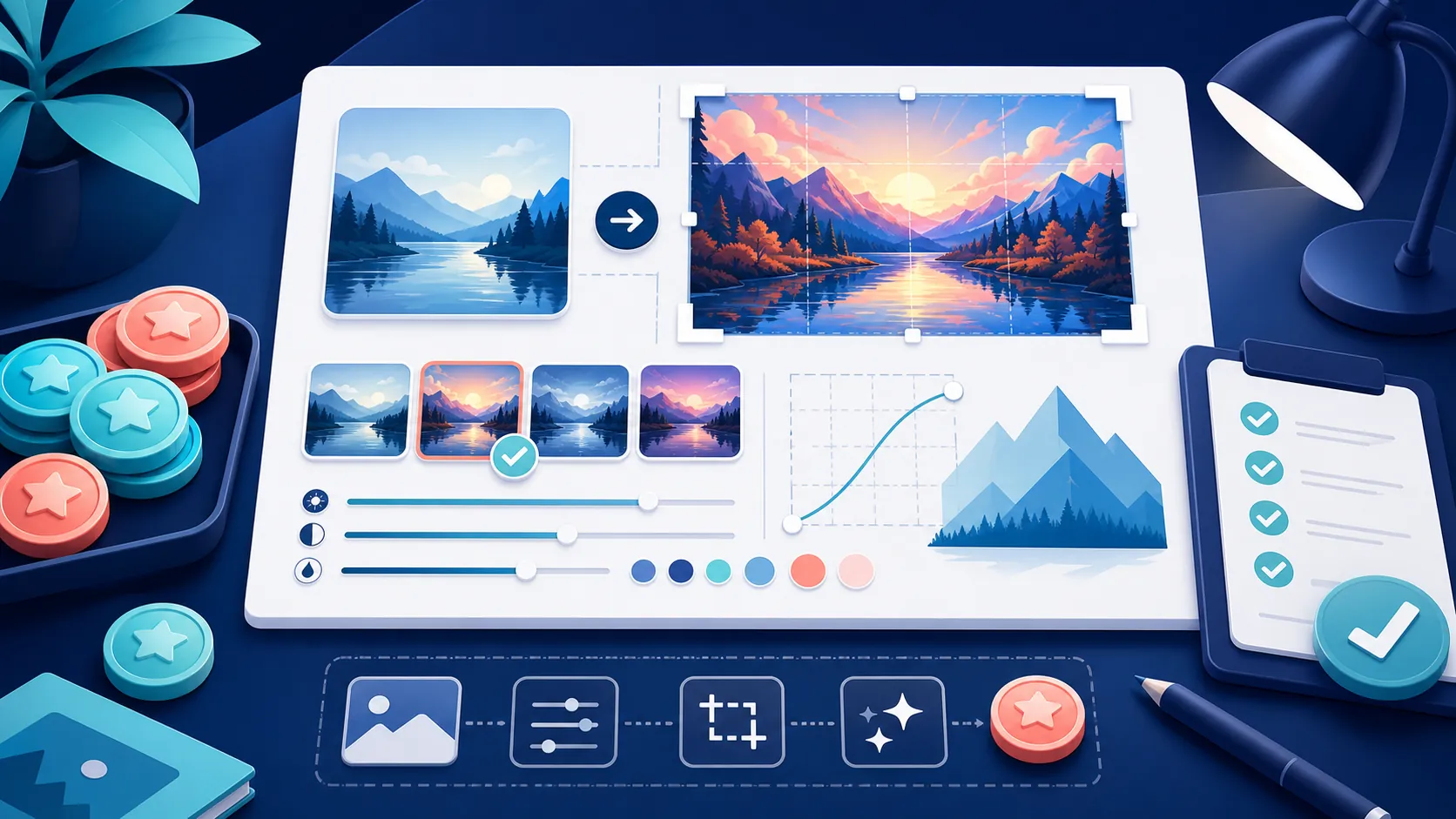
The article moves through The Real Decision Behind Image to Image AI Credits, Where This Approach Creates the Most Value, and What to Try First and What to Ignore so the reader can define the decision, test it once, and choose a next step.
Key Takeaways
- Frame image to image ai free credits guide around the reader's next move instead of a broad feature tour.
- Use ImageImage.org as the baseline, then add a follow-up path only if it improves the decision.
- Use The Real Decision Behind Image to Image AI Credits to define the job, owner, and success rule before opening more options.
- Use Where This Approach Creates the Most Value where one short session can prove value; pause when cleanup becomes the real work.
The Real Decision Behind Image to Image AI Credits
The first decision is not whether Image to Image AI Credits Guide sounds interesting. It is whether one short session can help with a named job. For a small team, that job might be the intended reader or the output shape; the review rule is a pass/fail review rule for reuse. Start with ImageImage.org only after that job is clear, because browsing without a success rule makes every option look equally plausible. Anchor this to reader problem and decision point. Tie the advice back to reader problem, decision point, and constraint; those details are what make this section belong to the topic.
- Name the exact job behind The Real Decision Behind Image to Image AI Credits.
- Separate curiosity from the repeatable Image to Image AI Credits Guide decision this section is meant to support.
- Decision point: use The Real Decision Behind Image to Image AI Credits to remove one uncertainty, not to add another general option.
Decision Criteria
- Reader Problem: name the exact job, the person doing it, and what would count as a useful first result.
- Decision Point: choose whether to test now, browse alternatives, or narrow the brief before moving.
- Constraint: keep the first image to image ai credits guide session small enough to finish, review, and repeat without guesswork.
That baseline matters before the reader opens ImageImage.org or uses OpenAI's prompt engineering guide as a reference point, because both are easier to judge when the first job is already named.
Where This Approach Creates the Most Value
Free credits create the most value when the first result can be judged quickly and reused without heavy cleanup. That usually means the workflow has a visible input, a visible output, and a limit the reader can accept. If Free Credits helps compare options, use it as a check; if it only adds more choices, stay with the smaller test. Anchor this to scenario and fit. Make scenario, fit, and tradeoff explicit so the paragraph cannot drift into a reusable framework.
- Use Where This Approach Creates the Most Value when the first Image to Image AI Credits Guide result can be judged quickly.
- Decision point: use Where This Approach Creates the Most Value to remove one uncertainty, not to add another general option.
- Pause when the Image to Image AI Credits Guide workflow needs heavy cleanup before it creates value.
That keeps the Where This Approach Creates the Most Value section honest for imageimage.org: the reader is reducing the next decision to something observable.
What to Try First and What to Ignore
The first pass should be deliberately plain. Pick one route, run one session, and judge one result before changing the audience, format, tone, or goal. That discipline is what keeps image to image ai free credits guide from turning into random exploration. Anchor this to first test and ignore list. Anchor this section in first test, ignore list, and review rule, then leave out anything that does not change the decision.
- Try the lowest-friction path first.
- Local fit: keep this section grounded in imageimage.org and the reader's next prompt workflow decision.
- Keep the version that is easiest to repeat.
- Expand only after the first path is stable.
The useful next step is to run one small prompt workflow test, keep the result, and ask whether it clarifies the original decision.
A Practical Decision Checklist
The final decision should be a verdict, not a mood. After one focused pass, the reader should know whether to continue, pause, or rewrite the brief. Use the checklist below before spending more time in AI Image Tools or comparing another path. Anchor this to go signal and pause signal. Make go signal, pause signal, and next action explicit so the paragraph cannot drift into a reusable framework.
- Go forward when the first test creates one usable outcome.
- imageimage.org check: tie A Practical Decision Checklist back to go signal and pause signal before recommending another path.
- Change 1 input at a time so the next pass teaches something specific.
Checklist
- Go Signal: continue only when the first pass creates something usable without heavy cleanup.
- Pause Signal: stop when the result depends on assumptions the reader cannot verify.
- Next Action: open the relevant page, save the working version, or tighten the brief before retrying.
After this check, image to image ai free credits guide should have a clear verdict: continue with the path that worked, pause because the signal is weak, or rewrite the brief before spending more time.
Review Image to Image AI Credits Guide Before Scaling the Workflow
Before committing more time to image to image ai free credits guide, ask whether the first result is useful or merely interesting. On imageimage.org, that means matching the result to a real constraint, not a generic idea of usefulness. If the first result looks interesting but does not help beginners and curious readers trying to understand image to image ai credits without jargon overload, it is still too early to build a larger routine around it.
The review should answer three things: what worked, what needs one cleaner retry, and whether the result helps the reader choose one relevant next click. Those questions keep the decision grounded in evidence the reader can see. They also keep the workflow practical: the intended reader, the output shape, and a pass/fail review rule for reuse.
- Keep the first test small enough to finish in one sitting.
- Change one variable at a time so the result teaches something specific.
- Save the first usable version before exploring variants.
- Stop when the next retry would only make the workflow busier, not clearer.
That review makes image to image ai free credits guide easier to trust because the reader knows when to continue and when to pause. They can move forward when the workflow produces one clear, reusable outcome, and they can pause when the process depends on guesses the first session has not proved.
FAQ
What Is Image to Image AI Credits?
In this guide, image to image ai credits means using image to image ai free credits guide for a defined job, then judging whether the result is clear enough to repeat. Start with ImageImage.org, keep the first test narrow, and treat Pricing as a comparison point only after the basic fit is visible.
When Does Image to Image AI Credits Guide Make Sense for Imageimage Readers?
This approach makes sense when one concrete job is ready for review. It is weaker when the reader cannot yet name the output, limit, or next action.
What Does a Practical Imageimage Workflow for Image to Image AI Credits Guide Look Like?
A practical workflow is to define the job, run one narrow version through ImageImage.org, review the result, and then use Pricing or Free Credits only if the next step is still unclear.
What Limitations Should Imageimage Readers Check with Image to Image AI Credits Guide?
It breaks down when the reader cannot tell whether the output is useful, reusable, or merely novel. A narrower brief usually fixes more than another blind retry.
How Do You Know If Image to Image AI Credits Guide Is the Right Fit for Imageimage?
The fit is strong when the Image to Image AI Credits Guide output survives a calm review and the next step is obvious. If the reader has to rescue the result manually, tighten the job first.
Imageimage Review Rule for Image to Image AI Credits Guide
For image to image ai free credits guide, make the first prompt easier to judge before the reader adds more variants.
For image to image ai free credits guide, the right next step is a small first attempt with a clear stop rule. Start with ImageImage.org, then use Pricing only when it improves the decision. That keeps the image to image ai free credits guide decision practical enough for the reader to act on after the page.
A strong image to image ai free credits guide article leaves the reader with a concrete action, a review signal, and a reason to stop before the workflow gets busier than the decision requires.