
For readers evaluating ai background remover for product photos, the fit question is where it helps, which inputs control the result, and what needs human review before the workflow repeats. AI Background Remover for Product Photos needs a practical bridge from raw request to repeatable prompt routine. For imageimage.org, start with ImageImage.org; bring in Pricing only when it clarifies the next decision.
A concrete opening test for ai background remover for product photos stays specific: the intended reader, the output shape, and a pass/fail review rule for reuse. The local decision belongs on Image to Image AI – Free AI Image Generator | ImageImage.org; the supporting frame from OpenAI's prompt engineering guide and Anthropic's prompt engineering overview keeps the article from drifting into vague advice. That matters for readers deciding whether ai background remover for product photos fits a specific use case, workflow, or constraint. The page is intentionally narrower than overlapping published topics on imageimage.org: audience fit, criteria, and search intent do the separating work.
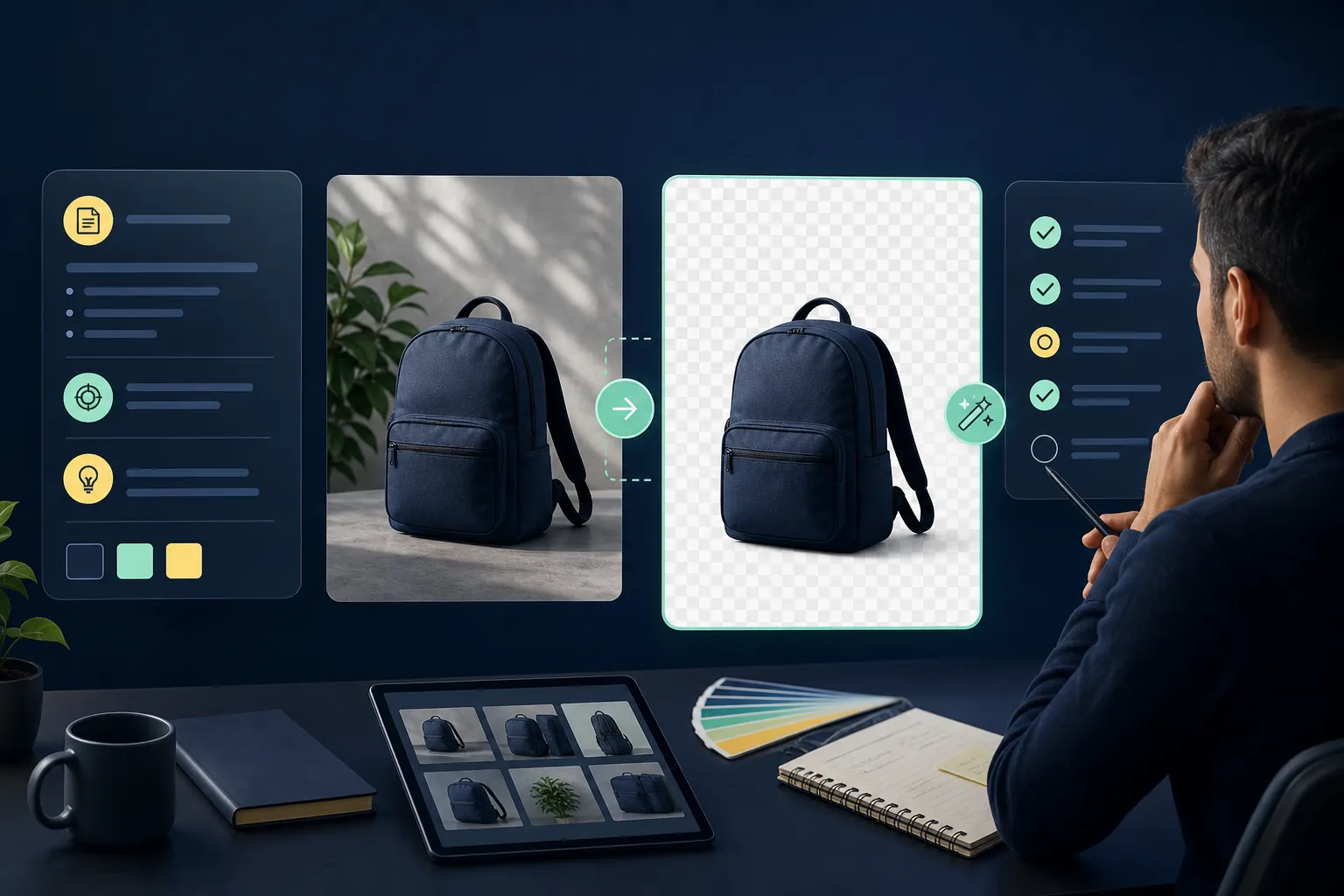
That sequence keeps ai background remover for product photos readable: first the criteria, then the workflow, then the limit that tells the reader when to stop.
Key Takeaways
- Frame ai background remover for product photos around the reader's next move instead of a broad feature tour.
- Let ImageImage.org handle the first pass before asking the reader to compare more options.
- Start with one prompt brief, one output format, and one review rule before adding variants.
- Keep A Repeatable Workflow You Can Reuse small: prepare, run, review, save, then improve one variable.
The Fastest Useful Start for AI Background Remover for Product Photos
The fastest useful start for ai background remover for product photos is one concrete example, one target outcome, and one success rule. Run the smallest complete AI Background Remover for Product Photos pass first, then check whether the result is usable before scaling it into a larger workflow. Anchor this to first input and success criteria. Tie the advice back to first input, success criteria, and time box; those details are what make this section belong to the topic. The reader should be able to judge The Fastest Useful Start for AI Background Remover for Product Photos with the intended reader, the output shape, and a pass/fail review rule for reuse.
- Name the exact AI Background Remover for Product Photos job before comparing options in The Fastest Useful Start for AI Background Remover for Product Photos.
- imageimage.org check: tie The Fastest Useful Start for AI Background Remover for Product Photos back to first input and success criteria before recommending another path.
- Keep only the step that makes the next attempt easier to judge.
Step Summary
- Define the prompt workflow job and success criteria.
- Run one narrow prompt workflow version before adding variants.
- Review prompt workflow against the strongest constraint.
- Save the prompt workflow version that is easiest to reuse.
That baseline matters before the reader opens ImageImage.org or uses OpenAI's prompt engineering guide as a reference point, because both are easier to judge when the first job is already named.
A Repeatable Workflow You Can Reuse
A repeatable ai background remover for product photos workflow needs fewer moving parts than most people expect. Prepare one AI Background Remover for Product Photos input, run one version, review it against a short rule, and save the version that worked. Only after that baseline is visible does Free Credits become a useful comparison instead of another distraction. Anchor this to prepare and run. Keep the checkpoints visible: prepare, run, review, and save. Make the test specific to ai background remover for product photos: the intended reader, the output shape, and a pass/fail review rule for reuse.
- Prepare the smallest useful input.
- Run one version and save the output.
- imageimage.org check: tie A Repeatable Workflow You Can Reuse back to prepare and run before recommending another path.
- Improve one variable before scaling.
If A Repeatable Workflow You Can Reuse leaves the reader with too many choices, return to the smallest prompt workflow test and compare one alternative through Free Credits.
How to Review the First Output
The first finished output should be reviewed before the reader builds a routine around it. Check whether the input, constraint, result, and reuse plan for AI Background Remover for Product Photos still point in the same direction. If ai background remover for product photos runs but the result needs heavy manual repair, it is technically complete but not practically useful yet. Anchor this to accuracy and tone. Tie the advice back to accuracy, tone, fit, and reuse; those details are what make this section belong to the topic. A concrete prompt workflow test stays specific: the intended reader, the output shape, and a pass/fail review rule for reuse.
- Start with the constraint How to Review the First Output is meant to clarify.
- Decision point: use How to Review the First Output to remove one uncertainty, not to add another general option.
- Keep the workflow small enough that the weak step is easy to see.
The useful next step is to run one small prompt workflow test, keep the result, and ask whether it clarifies the original decision.
When to Iterate and When to Stop
Iteration helps only when it teaches something specific about AI Background Remover for Product Photos. Change one variable, run one review pass, and keep the version that is easiest to reuse. If every retry creates a different problem, stop and narrow the ai background remover for product photos setup before exporting again. Anchor this to one variable and good enough. Keep the checkpoints visible: one variable, good enough, and stop rule. A concrete prompt workflow test stays specific: the intended reader, the output shape, and a pass/fail review rule for reuse.
- Name the exact AI Background Remover for Product Photos job before comparing options in When to Iterate and When to Stop.
- Local fit: keep this section grounded in imageimage.org and the reader's next prompt workflow decision.
- Keep only the step that makes the next attempt easier to judge.
After this check, ai background remover for product photos should have a clear verdict: continue with the path that worked, pause because the signal is weak, or rewrite the brief before spending more time.
Review AI Background Remover for Product Photos Before Scaling the Workflow
Before committing more time to ai background remover for product photos, ask whether the first result is useful or merely interesting. For imageimage.org, judge the result against the user's actual constraint and the next action they are willing to take. If the first result looks interesting but does not help readers deciding whether ai background remover for product photos fits a specific use case, workflow, or constraint, it is still too early to build a larger routine around it.
Before expanding, ask whether the first pass solves the job, shows the next edit, and supports the goal to choose one relevant next click. Those questions keep the decision grounded in evidence the reader can see. They also keep the workflow practical: the intended reader, the output shape, and a pass/fail review rule for reuse.
- Keep the first test small enough to finish in one sitting.
- Change one variable at a time so the result teaches something specific.
- Save the first usable version before exploring variants.
- Stop when the next retry would only make the workflow busier, not clearer.
The point is not to make AI Background Remover for Product Photos sound bigger; it is to make the next decision easier to defend. They can move forward when the workflow produces one clear, reusable outcome, and they can pause when the process depends on guesses the first session has not proved.
FAQ
When Does AI Background Remover for Product Photos Make Sense?
The right moment for AI Background Remover for Product Photos is when the reader can judge one result against one success rule instead of hoping the workflow feels useful later.
What Problem Does AI Background Remover for Product Photos Solve?
The problem ai background remover for product photos solves is the gap between a broad idea and a result the reader can judge. It helps readers create a testable first pass, then compare that pass against ImageImage.org, Pricing, or another relevant page before investing more time.
What Does a Practical AI Background Remover for Product Photos Workflow Look Like?
Begin by writing the output target, run a small pass through ImageImage.org, then compare with Pricing or Free Credits after the baseline is visible.
What Are the Main Limitations of AI Background Remover for Product Photos?
Watch for weak inputs, unclear ownership, and late review criteria in AI Background Remover for Product Photos. Those mistakes make ai background remover for product photos feel productive while hiding cleanup work.
How Do You Know If AI Background Remover for Product Photos Is the Right Fit?
The right fit for AI Background Remover for Product Photos is a workflow where the first run produces one outcome the reader can reuse, explain, or improve. If the result needs heavy manual repair, narrow the brief before spending more time.
What to Do Next With AI Background Remover for Product Photos
AI Background Remover for Product Photos needs a practical bridge from raw request to repeatable prompt routine.
For ai background remover for product photos, continue when the use case produces a result the reader can reuse, explain, or improve. Start with ImageImage.org, then use Pricing only when it improves the decision. For prompt workflows, the winning path is the one that turns a vague request into a repeatable brief, output, and review loop.
The final test is simple: ai background remover for product photos should feel easier to judge after the article than before it.